
Building Business Networks – A Strategy for Enterprise Shaping

By Johnson Manyakara
Enterprise shaping in an organisation is amongst any board’s primary responsibilities.
Aristotle once said, “We are what we repeatedly do”. Weaving the building of effective business networks into the fabric of an organisation – turning it into “the way we do business around here” for the Board, Senior Management and for a critical mass of staff at all levels is imperative for Board Leadership. Most Boards focus on investments, market competitiveness, talent quality positioning, enterprise risk management positioning, etc. in shaping their enterprises without due regard to making the building of business networks an area of strategic focus.
Two key questions can be asked:-
- What are the strategic benefits of business networking?
- Just how are effective business networks built?
Strategic Benefits of Business Networking
Friendship
Friendship plays a pivotal role in enterprise shaping. Good friends can become a bedrock for life, ideas and even for business. You share successes in business and even mistakes to avoid, with friends. With business networking, you end up making great friends with “birds of a feather”.
Positive Influence
Business success starts in the mind – a positive attitude towards the business begets positive outcomes. As a Board, you don’t want Board members and the Executive team to have a negative attitude towards the business.
Networking ensures that Board members and members of the EXCO surround themselves with people who are positive and uplifting – professionals who give them positive influence.
Increased Confidence
Typically, lack of confidence impacts negatively on individuals, more so in business. Spare a thought for Board members who have brilliant ideas which they cannot put across, for lack of confidence. Also for a CEO involved in strategic negotiations for a major contract or investment but cannot effectively sell ideas, for lack of confidence.
By networking regularly, one would be able to push oneself to talk to different people and gain confidence, in the process, this would eventually increase the value one adds to the business.
Generation of Referrals
Achieving sales volume, revenue and profitability targets is every business’ dream. Building business networks helps enterprises generate and increase quality referrals to the business – referrals that can be turned into leads, clients and life-long clients, ingredients for business survival, growth and therefore, sustainable success.
New Opportunities
Opportunities in this context means an asset or business sale, a partnership, a joint venture or many more. Are such new opportunities not what enterprises strive for for sustainable business? By networking with different professionals, one will come across new opportunities that an enterprise may leverage on.
Be warned to choose the right opportunities though and ignore those that make you stray from your vision and mission. Opportunities you pursue should strengthen your business goals rather than bring clutter.
Connections
Sam (not his real name) was a Plant Manager for a beverages company. His primary role was to ensure there was always product in the warehouse – NO STOCK OUTS! Sam forgot to procure a key input in the production of the market’s favourite drink, A grade sugar, by the end of the previous shift. Because Sam had Samantha (not her real name), a Sales Manager at the firm’s supplier of the A grade sugar, as part of his business network, Sam phoned Samantha at night to cry for help. Samantha cut through the bureaucracy and bailed out Sam with enough quantities of the A grade sugar. Result? By morning, Sam had produced enough product in the warehouse for the market.
In the business world, it is all about WHO you know and not about WHAT you know – CONNECTIONS! With the number of connections made through the building of business networks, anytime you need something, you can easily call them to get help.
Just How Are Effective Networks Built?
We build business networks by going through four (4) key steps below:
Step 1: Mapping your “As Is” Network:
Populate the blank network “map” below, guided by the following:
Your most important professional contacts:–
- Who are important sources of information, help and advice pertaining to your business;
- Who has contributed most to your business in the last couple of years and remain sources of information, help and advice; and
- Who are important sources of support, for example, people with whom you share important business-related experiences and dilemmas or with whom you enjoy spending free time golfing.
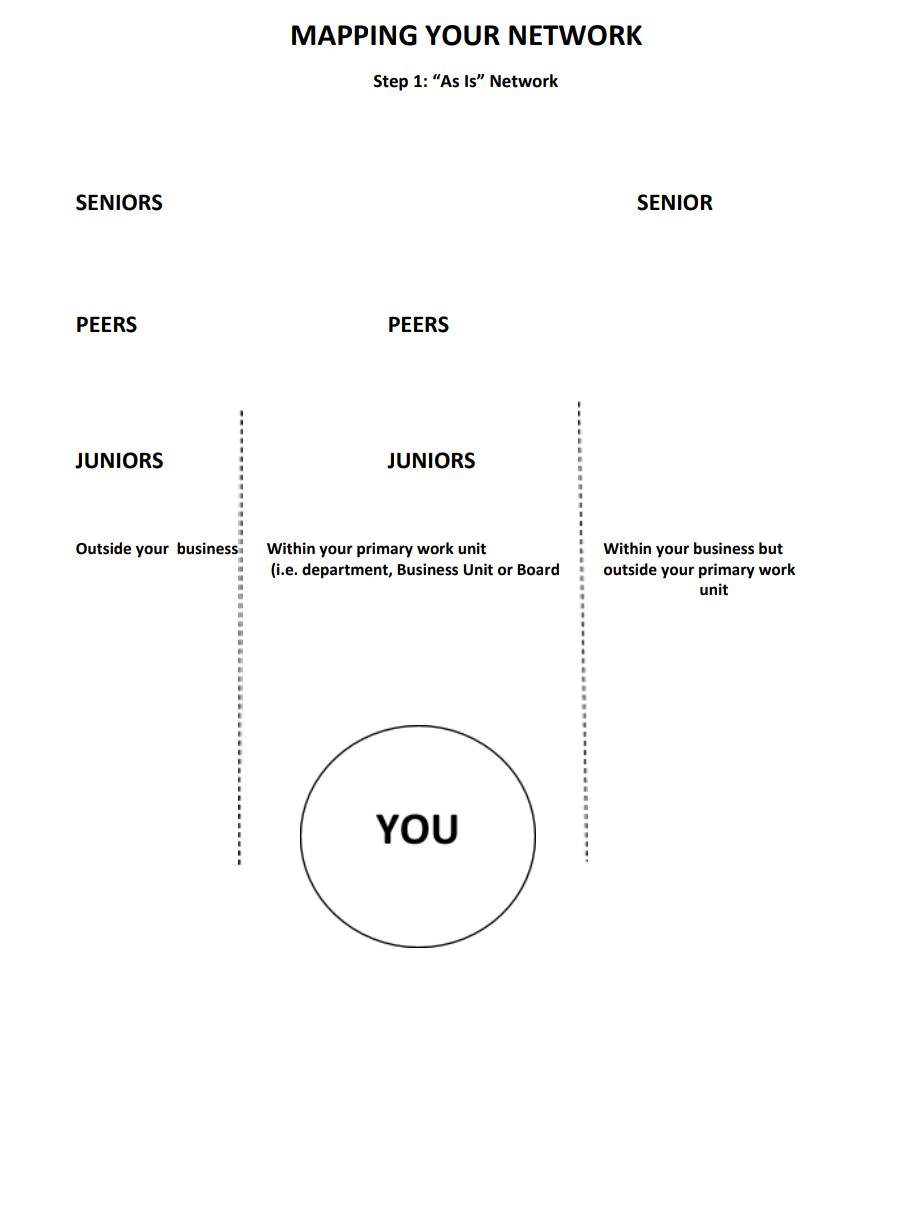
Use the terms “Juniors,” “Peer” and “Superiors” broadly. In your business, Juniors include people you supervise and outside your business, the term merely refers to people who are less experienced than you or hold more junior positions. Peers include people at your level in your business or outside your business. Seniors include people within or outside your business who are more advanced than you.
Do not list anyone on the blank network “map” more than once.
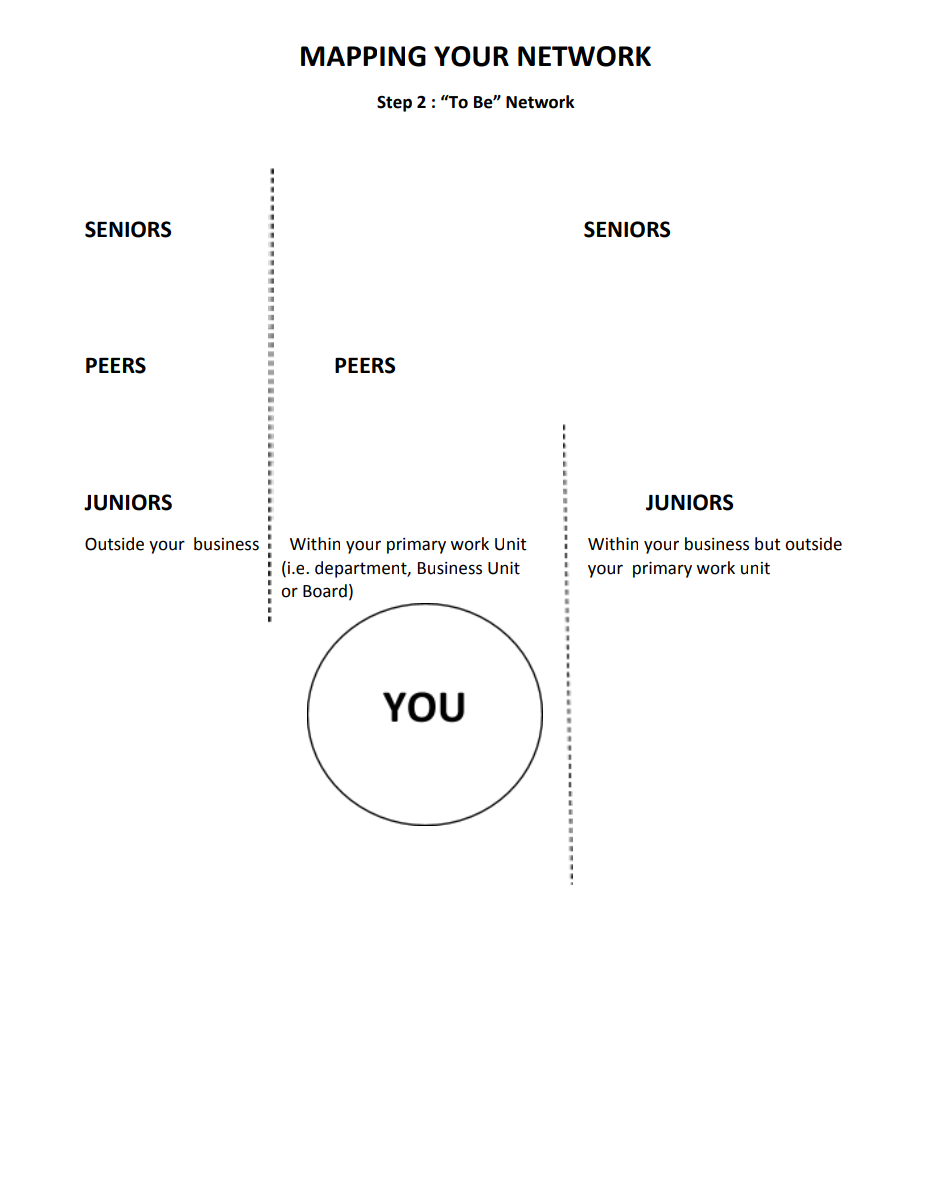
Step 2 – Mapping Your “To Be” Network
Your “To Be” network is your “Dream Network,” that is the network that you desire for you and your business to reach your full potential.
Once again, populate the Step 2 network “map” below, guided by the following:
The most important professional contacts (including those you currently have) –
- Who will be important sources of information, help and advice pertaining to your business;
- Who will contribute most to your business as sources of information, help and advice; and
- Who will be important sources of support, for example, people with whom you will share important business-related experiences and dilemmas or with whom you will enjoy spending free time golfing with.
Step 3 – Identification of Gaps
Review your “As Is” and “To Be” network “maps” to identify possible network gaps between where you are now and where you desire to be in order for you and your business to realise your full potential.
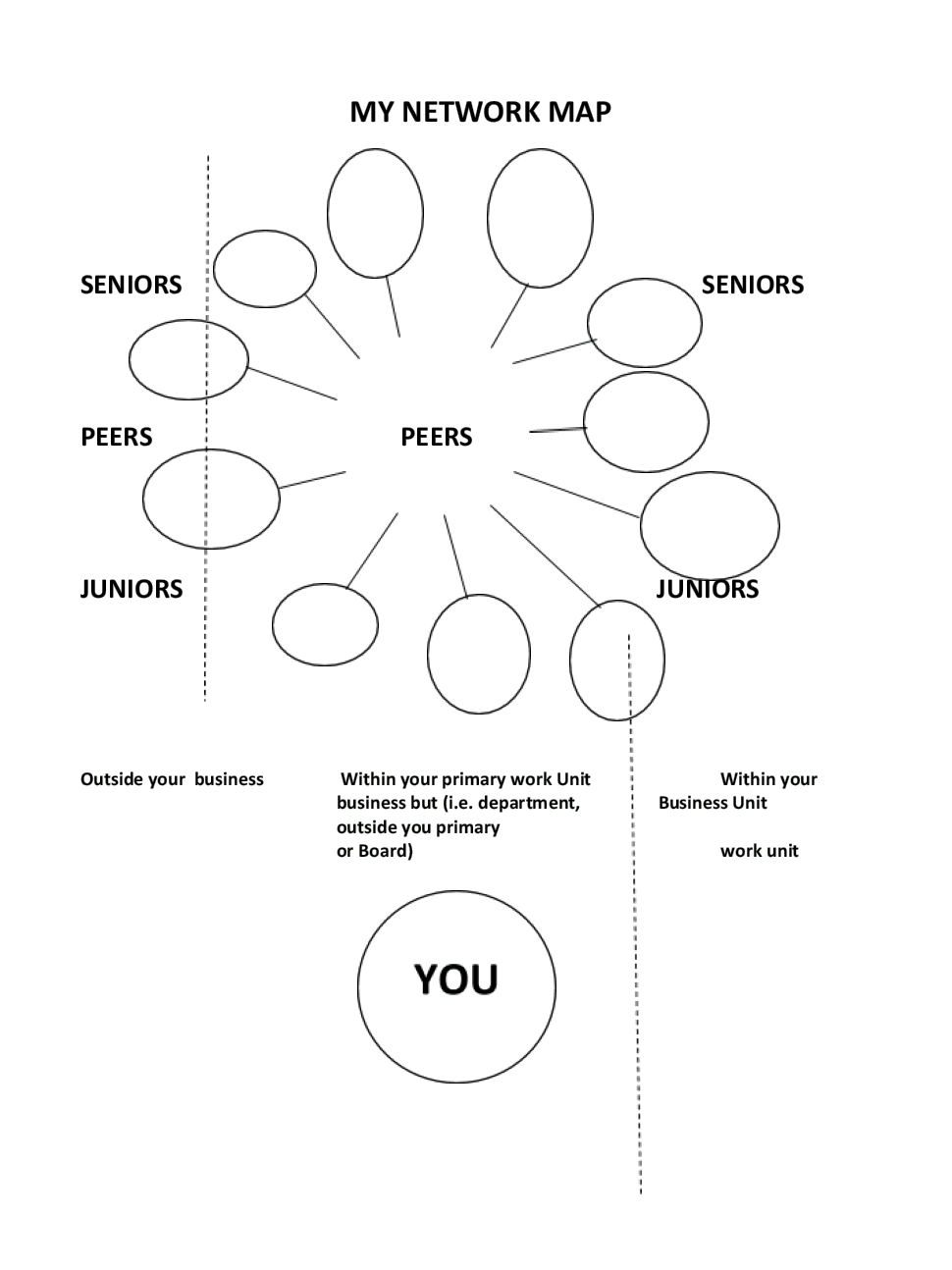
Step 4 – Gap Closure Strategies
Come up with strategies for gap closure. You may consider “brainstorming” with trusted professional friends for a more objective outcome. Draw up your Network Map on the blank network “map” below.
With all the benefits of building an effective business network discussed, including the “nuts and bolts” for building effective networks, what are you waiting for? Find out all the social and business events around and make time to join or attend those events to network and grow your brand and business.