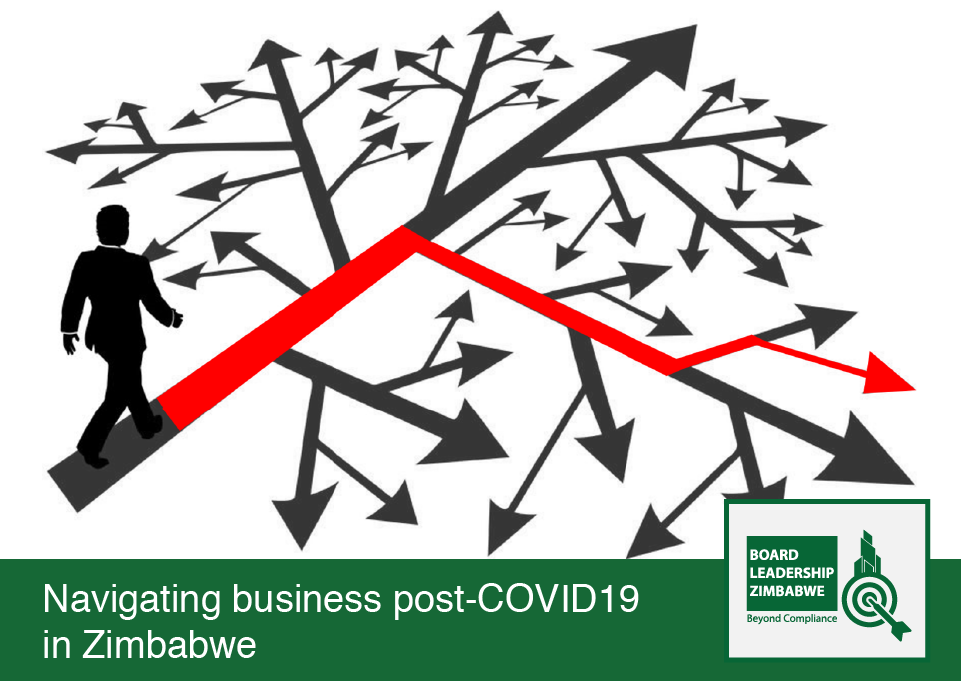
We are still living in the aftermath of the COVID-19 pandemic. On a business level, conditions vary daily on a global scale. Some of the changes include laws governing the pandemic, or, simply that some customers are no longer operating and, some suppliers are no longer reliable or even operating at all. But looking further than the day to day, there is no question that once the pandemic is “over” there will be a “new normal” which all businesses will have to adopt. So how does a business adopt scenario planning? The first and most important step is to reject the idea that you can foresee the future clearly. Projections are based on everything continuing as it previously has as if the future is a duplication of the past. But, most of the time, particularly now with COVID–19, situations, conditions, and the market itself are fluctuating daily. We are now
Read more

Scenario planning is the process of making assumptions on what the future is going to be and how your business environment will change over time as a result of your predictions. Scenario planning involves the identification of specific eventualities and probable realities that may happen to your business as a result of the current and projected climate of your environment. Building these assumptions is the best thing you can ever do to help guide your organization in the long term especially given the volatile nature of the Zimbabwean market. Scenario planning is originated from the military in WWII. During the war, it was always highly important (a matter of life and death) to be prepared for different possibilities – both good and bad. It wasn’t soon after the war that some companies saw that the methodology made sense in business. And given the current landscape, a post-pandemic world, rapidly changing
Read more

Teams and team members with role clarity are substantially more effective than those without. Role clarity is a prerequisite for team performance. Equally, Boards and Board members with role clarity are substantially more effective than those without. Role ambiguity for the Board and Board members, on the other hand, is one of the greatest sources of stress in Boards. This blog post explores the core responsibilities for Boards and for individual Board members with a view to reducing the levels of stress in Boards and enhancing Board performance. Boards’ Core Responsibilities Amongst Boards’ core responsibilities include the following: Helping to shape the vision and mission of the organisation; Participating in and approving strategic and policy decisions; Ensuring Leadership of the organisation, encompassing: Selecting and developing the CEO; Help in the selection and development of members of Senior Management; and Ensuring succession planning for the CEO and members of Senior Management.
Read more

The primary role of Boards is to provide direction and support to Executive Teams, balancing the interests of the organisations’ many stakeholders: senior management, customers, suppliers, financiers, government and the community at large. In most cases, the focus tends to be on compliance, for example, provisions of the Sarbanes-Oxley Act (USA), King IV, the Zimbabwe National Code of Corporate Governance and the recently promulgated Public Entities Corporate Governance Act (PECGA). Is such a focus adequate in this ruthlessly competitive global village? Compliance Requirements in the PECGA The PECGA provides that public entities in Zimbabwe comply with the following provisions: Board members appointment process; Board composition; Committees of the Board; Meetings of Boards; Board performance monitoring; Board members and senior management remuneration and allowances; Board members training and development; Board governance documents; Conflict of interests; Risk Management; Financial reporting; Annual General Meetings; and Annual reports. An impressive list indeed! Areas Beyond
Read more

With corrupt practices having been woven into the fabric of organisational culture of most organisations, both public and private, most Boards have introduced whistleblower policies to curb this cancer. But are whistleblower policies a panacea for all corrupt practices in organisations? This piece post will unpack the issue in the context of board leadership. Whistleblower Policy In an effort to fight corrupt practices in organisations, every organisation should seriously consider adopting a Whistleblower Policy. Typically, a whistleblower policy should have the following provisions: Availability: Who should the policy be available to? Recipient/s: Who should receive reports from whistleblowers? Early Reporting: How soon should identified concerns be reported? Method: How should the identified concerns be reported? Reporting Standards: What identified concerns qualify to be reported? Confidentiality: Should the whistleblowers be promised confidentiality or not? The Process: What will happen as a consequence of the report or after the report has been
Read more

The organisation’s ability to deliver against its mandate – whether it is financial success and/or success in the provision of basic services, such as garbage collection, clean water, electricity, telecommunications, transportation, health and education, is every Board’s dream. However, this will not come on its own, like manna from heaven. It takes deliberate effort by Boards and sound performance management processes, sometimes with the help of expert advice from consultants. This article is a high level exposé of typical errors in strategic performance management, the typical performance management cycle and provisions of the Public Entities Corporate Governance Act (PECGA), in relation to performance management processes in public entities. It focuses on performance management at Board level and at Senior Management level (i.e. the CEO and his or her direct reports). Typical Errors Readers will be able to recognise the typical errors in performance management below: No strategic plan in place.
Read more

There has been, and continues to be, a great deal of discussion of the roles of the Board and the CEO, particularly in a scenario where the CEO is an Executive Director. Should the roles be complimentary or should they be of a ‘hide and seek’ nature? Some argue that too many Boards are so passive that their CEOs run rings around them, given that most Board members have time constraints and at times, limited knowledge and other limitations. This post is an attempt to unpack these issues. Best Practice Best Practice is that the roles of the Board and the CEO should be complimentary with the CEO initiating and recommending to the Board most of the new innovations in the organisation and the Board considering the CEO’s recommendations and either approving, modifying or turning down the recommendations. It should be noted that the Board’s primary role is to ensure
Read more

No company, whether public quoted, private limited, state owned or community owned, would be happy with an ineffective Board – as a collective or individual Board members. There are many factors that impact the effectiveness of a Board. Most progressive Boards have recently added voluntary Board Performance Evaluation to this list of factors. This piece explores good practices in the area of Voluntary Board Performance Evaluation, covering some key considerations, bearing in mind that it is not a ‘one size fits all’ affair. Board Performance Dimensions Evaluated Best practice suggests that Boards should evaluate themselves in performance dimensions indicated below: Board Composition and Renewal Good corporate governance demands that in constituting itself, a Board should be alive to issues of gender, expertise, skills, knowledge, integrity and Board member independence. Considerations like Board terms and Voluntary Board performance evaluation are also important in Board renewal. Board Governance Systems Board governance systems,
Read more

Many organisations find themselves in serious financial trouble due to financial haemorrhaging. This can be prevented or minimised through effective Board financial oversight. Through this oversight, the Board also assures shareholders, key stakeholders and the public, that all funds invested and all returns from the business are used strictly to support the vision and mission. Financial oversight is one of the most important Board responsibilities. Organisations run the risk of making headlines when Boards overlook or fail to relentlessly focus on this key responsibility. Financial Oversight Defined Financial oversight entails appropriately stewarding the financial resources of an organisation to prevent or minimise financial haemorrhage and ensure financial soundness of an organisation on a sustainable basis. Sources of Financial Haemorrhaging The Board should be alive to some notable sources of financial haemorrhaging in order to play its stewardship role more effectively. Below are some of them: Lack of Financial Expertise A
Read more

By Panashe Maisva Product innovation involves innovating on features, functionalities and performances of products or service offerings. Process innovation on the other hand, is about innovating around processes (i.e. manufacturing, distribution and support of products/ services). It is about innovating to improve business strategies, reduce costs, improve service levels, mitigate risks and improve general company performance. Product + Process Innovation = Value Chain Innovation As companies formulate their process innovation strategies, four (4) questions need to be answered: Who? – Insourcing versus outsourcing? Should I do it myself or outsource? Do I have internal competencies and capabilities to do it myself or find someone to do it for me? Where? – Do I do it in Zimbabwe (inshoring) or do I do it in China (offshoring)? Do I source globally or locally? Necessary evaluation of pros and cons need to be carried out before a strategic decision can be made
Read more