Boards and Process Innovation
By Panashe Maisva
Product innovation involves innovating on features, functionalities and performances of products or service offerings.
Process innovation on the other hand, is about innovating around processes (i.e. manufacturing, distribution and support of products/ services). It is about innovating to improve business strategies, reduce costs, improve service levels, mitigate risks and improve general company performance.
Product + Process Innovation = Value Chain Innovation
As companies formulate their process innovation strategies, four (4) questions need to be answered:
- Who? – Insourcing versus outsourcing? Should I do it myself or outsource? Do I have internal competencies and capabilities to do it myself or find someone to do it for me?
- Where? – Do I do it in Zimbabwe (inshoring) or do I do it in China (offshoring)? Do I source globally or locally? Necessary evaluation of pros and cons need to be carried out before a strategic decision can be made in this regard. Offshoring manufacturing to countries like China, for example, usually comes off with cost advantages that arise from cheaper labour and raw materials, but these may be offset by cost of logistics and other factors.
- How? – This is a coordination question. How do I coordinate the various value chain processes (i.e. manufacturing, distribution, etc)?
- Whom? – Regarding distribution and channel strategy, which channels do I use to reach the market? Do I use retailers or third-party distributors?
Companies can innovate their processes by changing answers to the above four (4) questions.
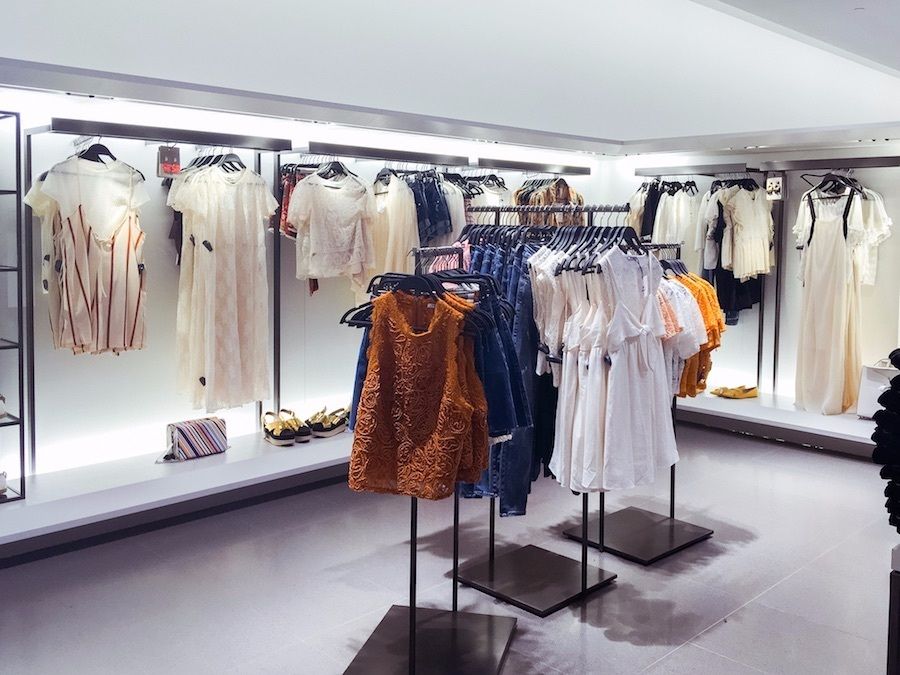
ZARA Case Study – Fashion-on-Demand
Source: https://www.businessinsider.com/hm-zara-compared-photos-details-2018-5
ZARA’s process innovation aims at delivering two (2) strategic outcomes, namely:
- Exclusivity; and
- Speed to Market.
Exclusivity
- New pieces of clothing in limited supply
- Few items on display
- Removal of unsold clothes after a few weeks
- Individual shops can choose what to order for themselves, which makes each store unique.
Speed to Market
- Reason why they produce so fast is their centralised production centre in Spain (Answers the ‘Where?’ question above).
- Market specialists, procurement personnel and salespeople are all sitting next to each other in La Coruna (‘How?’ and ‘Where?’ question).
- This allows the process between sketching through to design and send-off to be instant.
- Zara can take a design from the drawing board to stores in only two (2) weeks. This enables them to capture new catwalk trends very quickly.
- It’s 200 designers sit in the midst of the above action.
- They also allow their retailers to change orders to a higher extent than their competition. This flexibility saves over production and using cheaper materials permits lower prices.
- All this combined with Zara’s closely surveyed distribution network using latest IT, enables them to innovate new fashion every week, creating excitement in addition to exclusivity.
- They collect data from over 4,430 stores in 73 countries, to detect trends and respond with precision to different consumer preferences.
- This has led to Zara not needing much advertising, thus reducing costs.